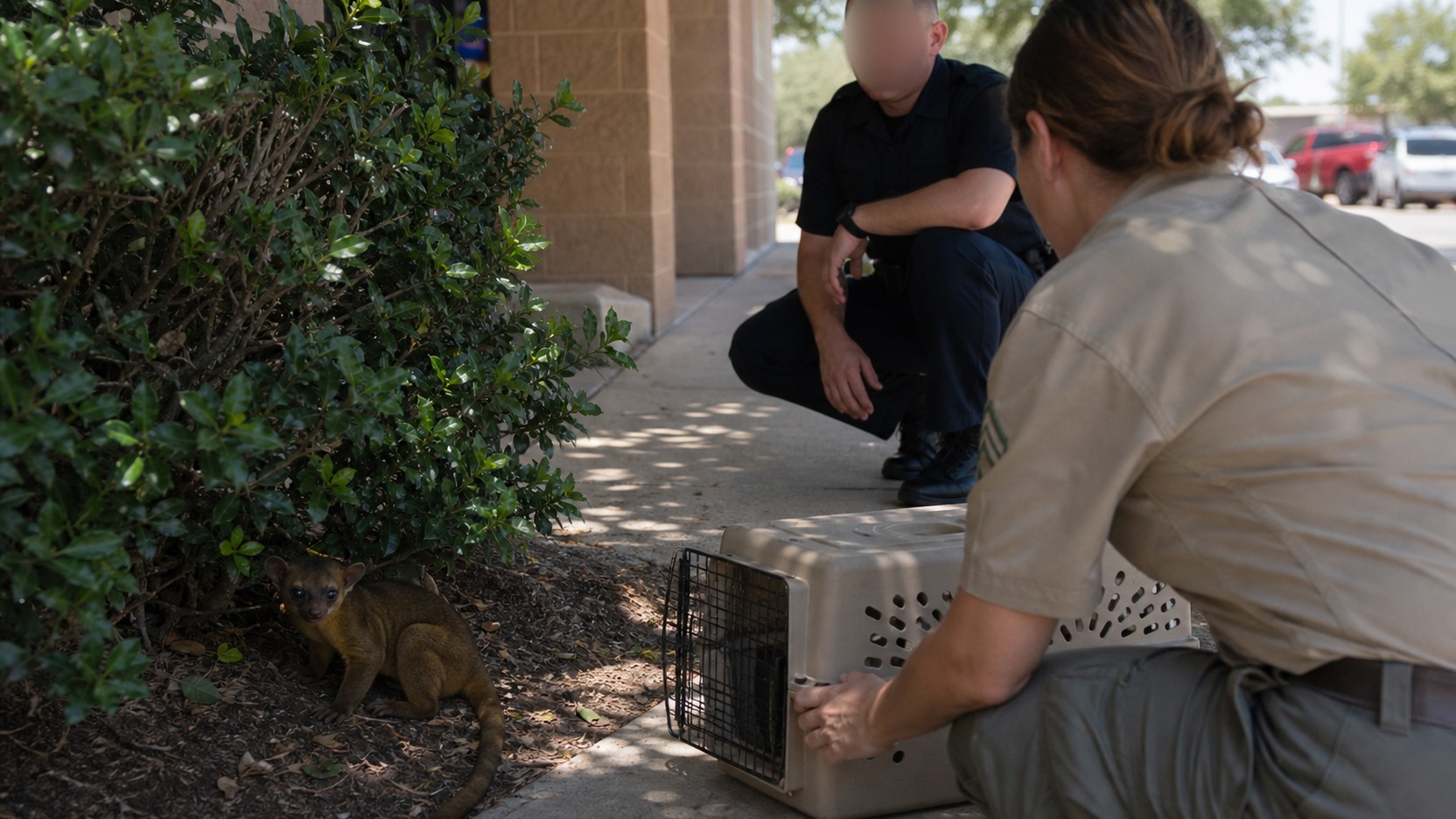
When North Richland Hills police got a call about a strange animal that might be a monkey or maybe a small kangaroo, nobody quite knew what they were walking into. What they found tucked behind a trash can outside a Mod Pizza was neither. It was a kinkajou, an exotic little creature far from home and desperate for shade on a brutal Texas afternoon.
- North Richland Hills police rescued a kinkajou hiding from the summer heat behind a business trash can.
- The animal suffered paw burns from the hot concrete before it was taken to safety.
- After a stop at Animal Services, the kinkajou was moved to a wildlife rescue, and its origins are still unknown.
A Call That Left Officers Guessing
Picture the dispatch. Someone spots an animal they can’t name, so they reach for the closest thing they can think of. A monkey? A tiny kangaroo? The report that reached North Richland Hills police on Thursday was that vague, and honestly, you can’t blame the caller. Kinkajous aren’t exactly a common sight in a Texas parking lot.
Officers arrived to find the animal crammed behind a trash can outside a Mod Pizza, doing its best to stay out of the sun. It wasn’t a monkey and it definitely wasn’t a kangaroo. It was a kinkajou, an animal that most people have never seen in person and even fewer could identify on the spot.
So What Exactly Is a Kinkajou
Here’s the fun part. Kinkajous go by the nickname “honey bears,” and they’re native to the rainforests of Central and South America. They’ve got round faces, big eyes, and grippy little hands, which is why people so often mistake them for primates. But they’re not related to monkeys at all. Their closest relatives are raccoons.
They’re nocturnal, they spend most of their lives up in the trees, and they use long tongues to pull nectar from flowers and dig into fruit. In their natural habitat, they do just fine. Behind a trash can in the Texas summer, not so much. The heat that folks in North Richland Hills shrug off is a serious problem for an animal built for a shaded jungle canopy.
Hot Concrete and Burned Paws
The rescue wasn’t a moment too soon. When officers reached the kinkajou, it already had burns on its paws from the scorching concrete. That detail says a lot about how rough the situation had gotten. Pavement in the Texas sun can climb well past anything a bare foot, or paw, can handle, and this little animal had been out in it long enough to get hurt.
The good news is that the kinkajou was still mobile and responsive when help arrived. Officers got it out from behind the trash can and moved it somewhere cool, which was exactly what it needed after its failed attempt to hide from the sun behind a garbage bin.
From Animal Services to a Wildlife Rescue
The kinkajou’s first stop was the North Richland Hills Animal Services Center, where staff could get it out of the heat and start looking after those paw injuries. From there, it was handed off to Nature’s Edge Wildlife and Reptile Rescue, a group better equipped to care for an exotic animal with specialized needs.
One question is still hanging in the air. Nobody knows where the kinkajou came from. It might have been someone’s exotic pet that slipped away, since kinkajous are occasionally kept privately, though caring for them is a real commitment. For now, its backstory is a mystery, and the folks at the rescue are focused on getting it healthy rather than solving that puzzle.
Stories like this are a good reminder that wildlife shows up in the strangest places, and that a quick phone call can genuinely save an animal’s life. The caller didn’t know what they were looking at, and that was fine. They saw something in distress and reported it. That’s all it took.
If you ever come across an animal you can’t identify, especially one that looks stressed or out of place, the smart move is to keep your distance and call your local animal services. You don’t need to know whether it’s a monkey, a kangaroo, or a honey bear. You just need to make the call and let the experts handle the rest. This kinkajou got a second chance because someone did exactly that.
This post may contain affiliate links, meaning we may earn a commission if you make a purchase. There is no extra cost to you. We only promote products we believe in.