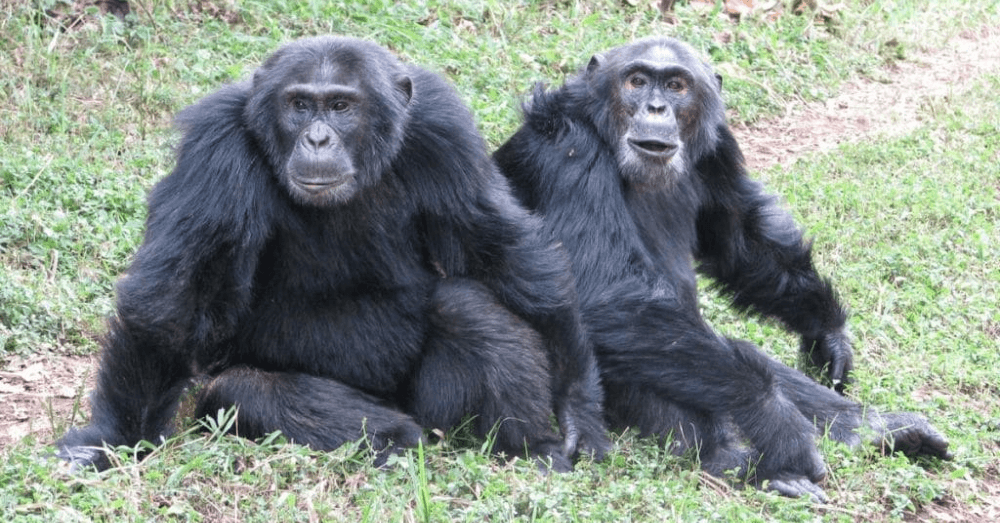
For 20 years, the world’s largest known community of wild chimpanzees lived together, groomed together, and patrolled together in Uganda’s Kibale National Park. Then everything fell apart. One faction began killing the other, and researchers say they’re watching what amounts to a primate civil war play out in real time.
- Researchers have documented the first clearly confirmed case of a wild chimpanzee group splitting into two factions and launching coordinated attacks, with 28 deaths so far.
- Scientists estimate that chimpanzee communities split, on average, only once every 500 years, making this an exceedingly rare event.
- Because chimpanzees are among our closest genetic relatives, the researchers believe these results offer lessons for understanding human conflict.
Decades of Peace, Then a Sudden Fracture
The researchers began studying the Ngogo chimpanzees in 1995. This was the largest known group of wild chimpanzees anywhere, peaking at around 200 members. Typical chimpanzee groups number about 50. For the first two decades, the community stuck together. Small groups would break away in clusters to go foraging or traveling, but the divisions were temporary and amicable. When the groups merged back together, everyone still got along.
On June 24, 2015, lead author Aaron Sandel was observing Ngogo chimpanzees when a Western party approached a Central one. Normally, the two would mingle and then split. But this time, the Western chimps quieted when they heard their Central group mates. Then they ran away, and the Central bunch chased after them. That moment marked the beginning of a slow, permanent fracture. The study, published April 9, 2026 in the journal Science, documents how the largest wild chimpanzee conflict ever recorded unfolded over the following years.
What Triggered the Violence
It’s still not clear exactly why the division led to such aggressive conflict, but Sandel suggested various factors that could have destabilized social ties. These include the unusually large group size, competition over food and reproduction, the deaths of five adult males and one adult female in 2014, a change from one alpha male to another in 2015, and a respiratory epidemic that killed 25 chimpanzees in 2017.
There was a change in the alpha male around the time tensions began in 2015, with a chimpanzee called Jackson deposing another male. The following year, another leadership shift coincided with the first period of separation between the Western and Central groups. Months after an illness in 2017 killed 25 chimpanzees, mostly infants, members of one of the clusters attacked Jackson, though he survived. By the end of 2017, two distinct groups had formed, labeled the Western and Central groups. The subsequent violence was perpetrated by the Western group against the Central group, starting in 2018.
Researchers said the Western chimpanzees, originally the minority, have been responsible for all attacks since the permanent split. Their population grew from 76 to 108, while the Central group has faced a steady decline. In 2025 and 2026, one adult male, one adolescent male, and two infants were killed, raising the death toll to 28. Many chimpanzees have disappeared without a clear cause, suggestive of additional unrecorded killings.
Killing Former Friends and Family
Researchers have long known chimpanzees will attack and kill members of neighboring chimpanzee groups, but this was different. Males in the two groups grew up with each other, knew each other their entire lives, and cooperated for years side by side. That’s what makes this case so disturbing to the scientists who’ve spent their careers watching these animals.
When attacking adult or adolescent males, Sandel said the chimpanzees use collective violence. Groups of five or 10 chimps would pile on a victim, holding him down, biting, kicking, and dragging him. Only the Western group has been on the attack. The Central group hasn’t retaliated, not even when they dramatically outnumbered their killers at the beginning of the ordeal.
Approximately 50 years ago, primatologist Jane Goodall reported a similar fission event among the Kasekela chimpanzee community in Gombe, Tanzania. Several adult males, adult females, and young individuals splintered into a new group. Many of them were then killed by former groupmates. But because Gombe chimpanzees frequently ate bananas from humans, some primatologists doubted whether the group fission was a natural behavior. Sandel says Ngogo “is the first time that you could say definitively that the civil war is actually happening.”
What a Chimpanzee War Can Tell Us About Ourselves
The study shows how in chimps, and perhaps humans, tensions in once-peaceful groups can grow into deadly violence, even without resource shortages or cultural divisions to fuel them. By looking at this in chimps, Sandel says, it strips away a lot of the noise around human war and shows how group identities can shift and lethal aggression can arise. The paper has sparked discussion among primatologists and anthropologists at institutions around the world, from a lecture hall in Cincinnati, Ohio to a field station in East Africa.
While the study gives us a window into the origins of aggression, co-author John Mitani cautioned against using it to define human nature. He said that while humans and chimpanzees share a common ancestor, humans have evolved to be an ultra-cooperative species that often helps strangers, a trait not seen in chimpanzees. As one researcher put it, “Our evolutionary past does not determine our future.”
The conflict at Ngogo continues. The research paper covers data collected up to 2024, but further attacks have happened in 2025 and 2026. The study relies on a decade of GPS-tracking data, 30 years of demographic data, and 24 years of detailed field observations, making it one of the most thoroughly documented primate conflicts in history. And the scientists who’ve watched these chimpanzees grow up, form bonds, and then tear each other apart say they still don’t fully understand why it happened.
This post may contain affiliate links, meaning we may earn a commission if you make a purchase. There is no extra cost to you. We only promote products we believe in.