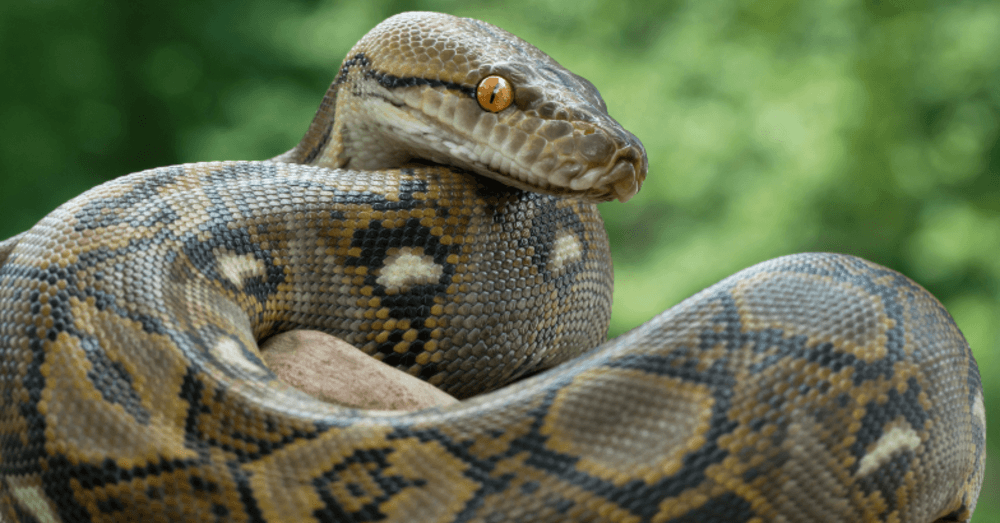
Pythons can swallow an antelope whole, then go a year without eating and still look ready for a magazine cover. That odd superpower just handed scientists a clue that might reshape how we treat obesity, and the python blood weight loss discovery behind it is turning heads in medical research circles.
- Researchers identified pTOS, a molecule that spikes 1,000-fold in python blood after a meal.
- In mice, pTOS curbed appetite and cut body weight without nausea, muscle loss, or energy drops.
- Humans produce tiny amounts of the same molecule, hinting at a new class of obesity drugs.
What Scientists Found Inside a Python’s Bloodstream
A team from the University of Colorado Boulder, working with Stanford and Baylor, set out to figure out how pythons survive their wild feast-or-famine lifestyle. Pythons can grow as large as a telephone pole, swallow prey the size of an antelope, and then survive for months or even years without another meal. Within hours of eating, their heart grows by about 25 percent and their metabolism speeds up by as much as 4,000 times to process the meal.
To catch the biology in action, the scientists drew blood samples before and after feeding. They spotted more than 200 molecules that jumped in abundance at least 32-fold in the pythons’ blood within hours after eating, and 24 that dropped by an equal margin. One increased more than a thousandfold, a dramatic meal-induced spike. That standout compound turned out to be para-tyramine-O-sulfate, better known as pTOS.
How pTOS Works Differently Than Ozempic
When researchers gave pTOS to mice, the results were striking. Obese mice given the molecule ate much less than mice that didn’t receive it, and after 28 days, they had lost 9 percent of their body weight compared with the control group. Tracking where the molecule traveled showed that it targets the hypothalamus, a brain region involved in hunger cues. That means it works a bit differently from GLP-1s, which, in part, act on the stomach.
That difference matters. GLP-1 medications like Ozempic and Wegovy slow down stomach emptying and can cause nausea, constipation, and stomach pain. pTOS skips the gut and heads straight for the brain’s appetite control center. In the python study, the mice didn’t lose muscle, didn’t slow down, and didn’t show signs of gastrointestinal distress.
That last part matters more than it sounds. While GLP-1 drugs are widely used, studies indicate that up to half of patients stop taking them within a year. If side effects are the main reason people quit, a drug that sidesteps them could fill a real gap.
The Gut Bacteria Connection
So where does pTOS actually come from? Further experiments showed that pTOS is a byproduct of the breakdown of tyrosine, an amino acid found in dietary protein, by bacteria in the gut. Treating the pythons with antibiotics before feeding wiped out the eating-associated increase in pTOS levels. In other words, gut microbes are doing the heavy lifting.
Humans have a version of this system too, just turned way down. The researchers found that pTOS is produced by bacteria in the python gut and does not naturally occur in mice. In humans, it shows up at low levels in urine and rises slightly after eating. And at least one person in an existing dataset was an outlier. A few people were more snakelike than others. One individual in the databases showed a more than 25-fold increase in pTOS after a meal, reaching python-level concentrations in their blood.
Why Reptiles Keep Inspiring Weight-Loss Drugs
If the idea of a reptile sparking a blockbuster drug sounds familiar, that’s because it’s happened before. Current GLP-1 drugs were themselves inspired by nature, specifically the Gila monster. The venom of this reptile contains a hormone similar to human GLP-1. Pythons might be next in line.
The research team isn’t waiting around either. They founded Arkana Therapeutics, hoping to develop pTOS-inspired analogs as next-generation therapies for obesity and sarcopenia. Sarcopenia, the age-related loss of muscle mass, is a serious issue for many patients who take current weight-loss drugs and watch lean tissue disappear alongside fat.
What’s Next for Snake-Inspired Medicine
There’s still plenty of work ahead before any of this reaches a pharmacy. Human trials haven’t started, doses need refining, and safety has to be established at every step. But the signal is strong, and the researchers aren’t stopping at one molecule. The team hopes to explore how pTOS works in people and catalogue the function of the other metabolites that increase after pythons eat. Some metabolites they identified soared by 500 to 800 percent. “We’re not stopping with just this one metabolite,” says Leinwand.
The bigger lesson here is a fun one. Sometimes the answers to human health puzzles are hiding in the weirdest places, like the bloodstream of a snake digesting a meal twice the size of its head. The python, it turns out, might end up teaching us how to eat less.
This post may contain affiliate links, meaning we may earn a commission if you make a purchase. There is no extra cost to you. We only promote products we believe in.