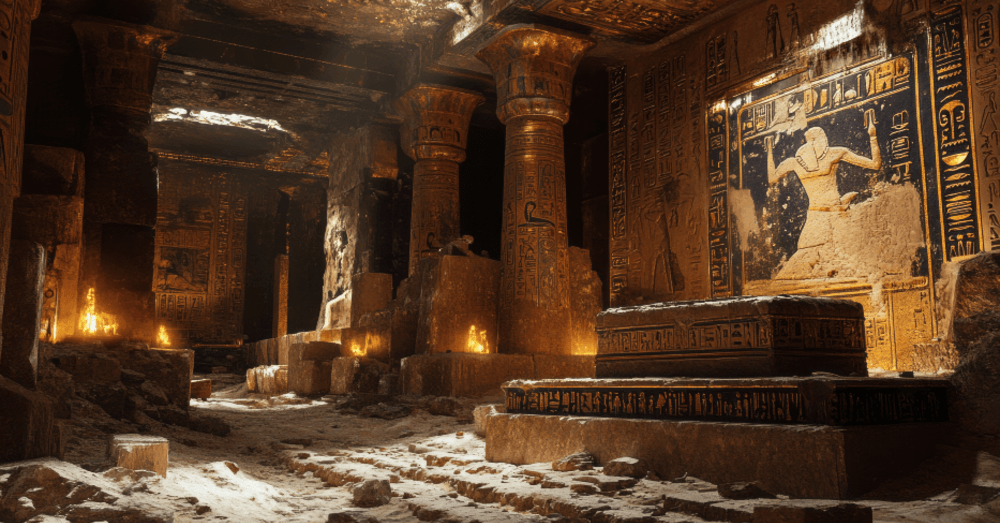
Tourists have been scratching their names into famous landmarks for thousands of years, and a recent discovery in Egypt proves that impulse is nothing new. Researchers have identified roughly 30 inscriptions written in ancient Indian languages on the walls of pharaoh tombs in the Valley of the Kings. The writings date back about 2,000 years, and one enthusiastic visitor named Cikai Korran was responsible for a big chunk of them.
- About 2,000 years ago, a visitor named Cikai Korran graffitied his name eight times in Old Tamil across Egyptian tombs, and several other individuals left dozens of additional inscriptions in ancient Indian languages.
- The nearly 30 inscriptions were written in four Indian languages and found inside six tombs, providing new evidence that people from South Asia visited ancient Egypt.
- In one case, Korran’s inscription was carved 16 to 20 feet above a tomb entrance, and researchers still aren’t sure how he managed to get up that high.
A Lucky Catch by a Modern Tourist
Ingo Strauch, a scholar at the University of Lausanne, noticed the inscriptions during his own tourist visit to the pharaonic tombs in January 2024, when he spotted graffiti that looked different from the usual Greek and Latin markings. Back home, he reviewed his photographs and began to suspect the writing might be Tamil. He sent the images to colleague Charlotte Schmid, who confirmed the text appeared to read something along the lines of “Cikai Korran came here and saw.”
A French scholar named Jules Baillet had cataloged over 2,000 pieces of graffiti in the tombs back in 1926, mostly in Greek and Latin. Past Egyptologists had actually noticed these particular markings before but had been unable to translate them. For nearly 2,000 years, the writings sat in plain sight because no one studying Egyptian graffiti knew Indian languages, and no one studying Indian languages was looking in Egyptian tombs. Whether you’re reading about ancient history from Noblesville, IN, or from anywhere else in the world, it’s wild to think about how long these messages went unread.
Korran’s Ambitious Tagging Spree
Cikai Korran was one prolific graffiti artist, writing eight inscriptions across five different tombs, all of which translate to “Cikai Korran came here and saw.” Because his writings are in Old Tamil, researchers believe he likely came from southern India.
What puzzles scholars most is where he chose to write. In the tomb of Ramesses IX, who reigned around 1126 to 1108 B.C., Korran carved his inscription 16 to 20 feet above the tomb entrance, and it’s unclear how he got up so high. In the tomb of pharaohs Tausert and Setnakhte, Korran’s inscription is the only graffiti found, suggesting the interior was closed off at the time of his visit, yet he still managed to locate the entrance and leave his mark.
His profession and social status remain uncertain, with scholars suggesting he could have been a merchant, a mercenary, a diplomat, or even a member of a regional elite from southern India.
A Royal Messenger and Ancient Cross-Cultural Connections
Korran wasn’t alone. The name “Indranandin” also appeared in Sanskrit among the graffiti, and he described himself as a messenger of King Kshaharata, referencing a dynasty that ruled over western India during the first century C.E. Researchers think Indranandin may have arrived by ship at the ancient port of Berenike on Egypt’s east coast and traveled inland to the Valley of the Kings, possibly even continuing on to Rome.
Twenty of the 30 inscriptions are in Tamil, while the others are in languages such as Sanskrit, Prakrit, and Gandhari-Kharoshi. Researchers were particularly struck by how some graffiti messages appear to be in dialogue with each other. Inside one tomb, writings in Sanskrit and Tamil reference another inscription written in Greek, suggesting visitors from different regions were aware of each other’s presence.
Strauch pointed out that scholars already knew traders from Tamil Nadu visited Egypt through inscriptions found in ancient port cities. But this discovery shows those travelers stuck around. They went sightseeing far from the coast, visiting tombs that were already ancient tourist attractions during the Roman era.
What These Scribbles Tell Us About the Ancient World
Before this find, there was no solid proof of visitors from India traveling to the Nile Valley during this early period, according to Egyptologist Steve Harvey of Stony Brook University. The newly identified inscriptions date to roughly the first to third centuries A.D., when Egypt was a province of the Roman Empire.
Strauch noted that these inscriptions show the presence of people of Indian origin from all parts of the subcontinent within Roman Egyptian society, and the discovery makes it likely that additional Indian inscriptions or other artifacts may yet be found in Egypt. Additional research at other Egyptian sites, including temples, could turn up even more.
Two thousand years from now, future archaeologists might find our Instagram check-ins and selfie locations equally fascinating. But there’s something special about Cikai Korran’s simple message carved into stone. He came, he saw, and he made sure everyone would know about it.
This post may contain affiliate links, meaning we may earn a commission if you make a purchase. There is no extra cost to you. We only promote products we believe in.